Increasing “Pay Together” feature adoption



CheQ, founded in 2022, is India’s leading credit management platform. Serving over 3.5 million users & powering transactions worth $5 billion+, CheQ is redefining financial convenience by helping users stay in control, confident, and valued.
CheQ enables seamless credit card & utility bill payments, combining security, simplicity & rewards to deliver a trusted financial experience for consumers nationwide.
About CheQ
Despite being a high-potential feature, CheQ’s “Pay Together” sees low adoption.
CheQ's Pay Together feature has only 60% reliability score compared to the industry standard of 88% for fintech payment platforms.
Users report payment settlements taking days instead of the promised 2 minutes, leading to credit score damage and late fees.
The feature exhibits 7 out of 8 major UX problems identified in payment app design standards, creating substantial barriers to user adoption and satisfaction.
Problem Statement
Settlement Delays: Critical Operational Failure undermining the fundamental purpose
Fundamental Problems
While the app promises payment completion within 2 minutes, users consistently report delays extending to 4+ days, creating severe downstream consequences:
Credit score damage due to missed payment deadlines
Late fees imposed by banks when payments don't arrive on time
Financial losses from duplicate payments & failed transactions
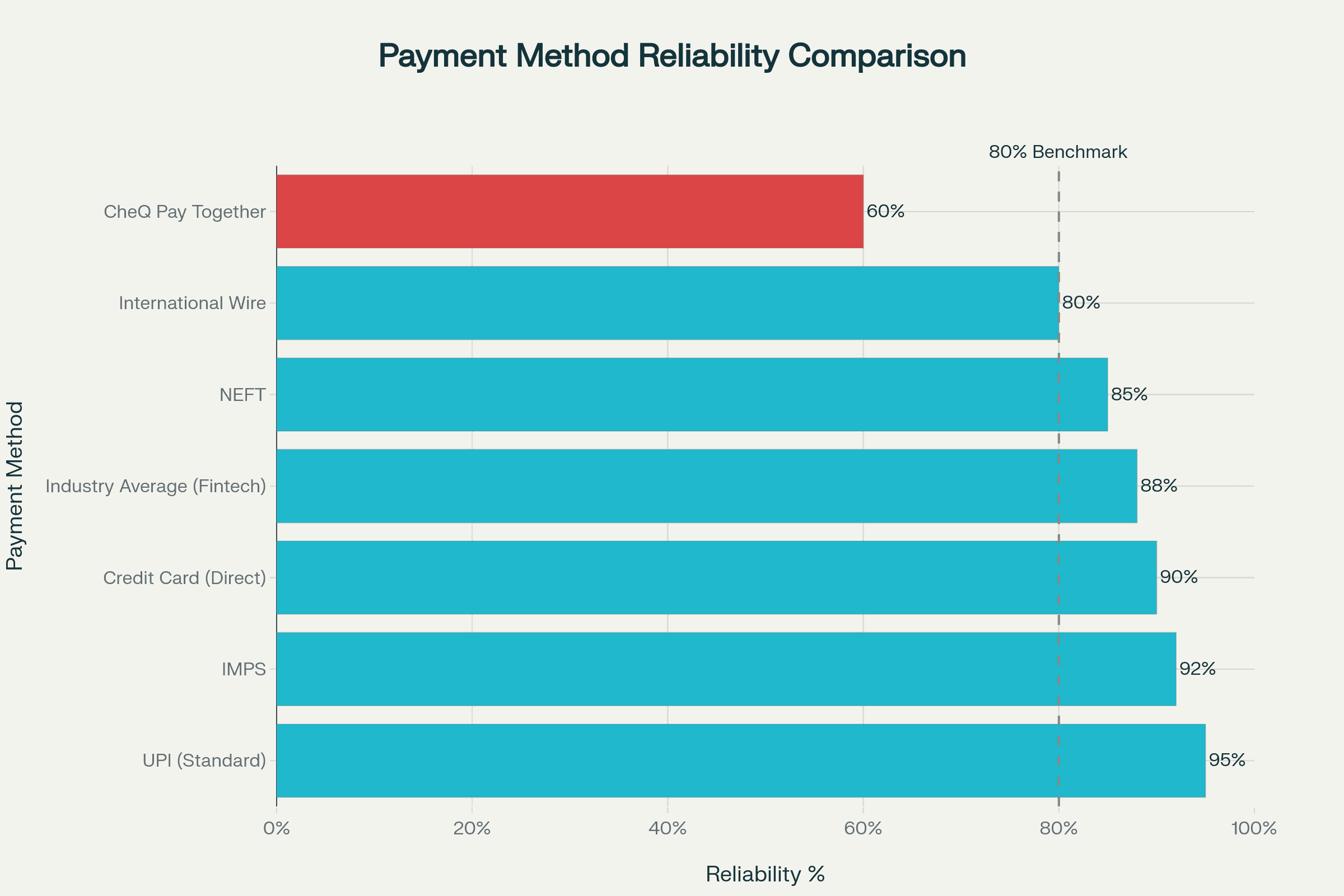
Industry Benchmark Comparison
Standard fintech payment takes 1-3 business days (88% reliability) and India's UPI system achieves instant settlements (95% reliability)
Disabled option for credit card payment via debit card
Need to make individual payments instead of using the consolidated feature
Limited payment options, reducing flexibility
Payment Method Restrictions
Reward System Dysfunction
Complex & Confusing Design
Lack of Transaction Transparency
Users report - CheQ chips cannot be used for bill payments within the Pay Together feature
eliminating a key incentive for using the platform.
Actual rewards falling below 0.3% due to processing fees, contradicts the app's marketing promises
Unclear payment progress & status indicators causing confusion & anxiety during payment processing
Inconsistent UI elements
Poor error handling leaving users unable to resolve issues independently
Users report misleading payment success confirmations, where the app shows successful completion while payments actually fail or remain pending.
False sense of security
Delayed awareness of payment failures leading to missed deadlines
Loss of user trust in the platform's reliability
Core Offering
Payment Features (relevant to “Pay Together”)
Rewards & Incentives
Reliability
and Trust
UX Strengths
Key Gaps vs CheQ Opportunity
Competitive Analysis
Credit-card bill management, rewards, credit products

Multi-card dashboard, one-tap card bill pay, reminders; no social/group split
CRED Coins, jackpots, partner offers
Strong trust among urban users; runs on bank rails/UPI
Premium, clean UI; gamification; clear statements
No group/split flows; aspirational rewards (less immediate value); Tier-1 skewed
UPI/wallet + utility & card bill pay
Basic bill pay, reminders; no native split
Cashback and coupons
Stable (on UPI/wallet rails)
Straightforward flows, light app
Limited differentiation; thin rewards; no group value
Wallet + UPI, bill pay, postpaid/BNPL, merchant network
Card/utility bill pay, autopay, limited split in groups, wallet fallback
Cashbacks, Paytm Points, merchant discounts
Mature infra (wallet + UPI)
Commerce tie-ins; many payment options
Buried Split flows; fragmented info architecture; inconsistent rewards

UPI + wallet for amazon ecosystem; utilities & card bill pay
Card/utility bill pay inside Amazon; autopay
Amazon Pay balance, bill cashbacks, shopping credits
High (Amazon infra + UPI)
Seamless for existing Amazon user; clear offers
Not credit card focused; no group/split

Targeted User Personas
Primary Needs & Motivations:
Struggling to manage 4 different payment due dates efficiently
Wants to Maximize Rewards & Cashback
Seeks premium experience that reduces manual tracking overhead
Swati | Young Urban Professional
Behaviors:
Age: 26
Income: ₹12-15 Lpa
Tier 1: Bangalore
Current Pain Points:
Juggling 4 different payment dates, missing optimal reward opportunities, time-consuming manual tracking
Long settlement delays causing late fees & missed oppourtunities
Strategies:
Instant Settlement
All Payment Methods Enabled
Premium UX Design similar to CRED's
Integrated Reward Optimization with clear tracking & maximization suggestions
Primary Needs & Motivations:
Reduce complexity of managing family financial obligations
Need visibility into household spending patterns and categorization
Critical to avoid late fees that impact family budget and credit score
Ravi | Family Finance Manager
Demographics:
Age: 34
Income: ₹8-10 Lpa
Tier 2: Lucknow
Current Pain Points:
Forgetting payment dates creates tension, complex reward calculations confusing
Payment delays create family anxiety, cannot use preferred debit card method, poor customer support response during urgent situations
Strategies:
90%+ Payment Success Rate with guaranteed reliability for peace of mind
Multiple Payment Options
Simple, Clean Interface following Paytm's straightforward design principles
24/7 Customer Support
Features like expense categorization
Primary Needs & Motivations:
Eliminate awkward money conversations with family and manual calculations
Maintain transparency in group financial obligations
Seamless digital payments for hostel and group expenses
Payal | Social Splitter
Demographics:
Age: 22
₹25k monthly (family support)
Tier 2: Pune
Current Pain Points:
Awkward money conversations with friends
Errors in manual calculation
Group payment features don't work properly
Settlement delays cause tension in friend relationships
Strategies:
Real-time Group Features (Instant settlement & social integration)
Transparent Expense Tracking following Splitwise's debt simplification approach
UPI-Native Integration leveraging Google Pay comfort & instant settlement
Social Commerce Features with referral programs & peer-based support
“Add family cards to Pay Together” → one consolidated household bill to earn more rewards.
Link Family
Cards
Family
Dashboard
One Consolidated Bill
Pay Together
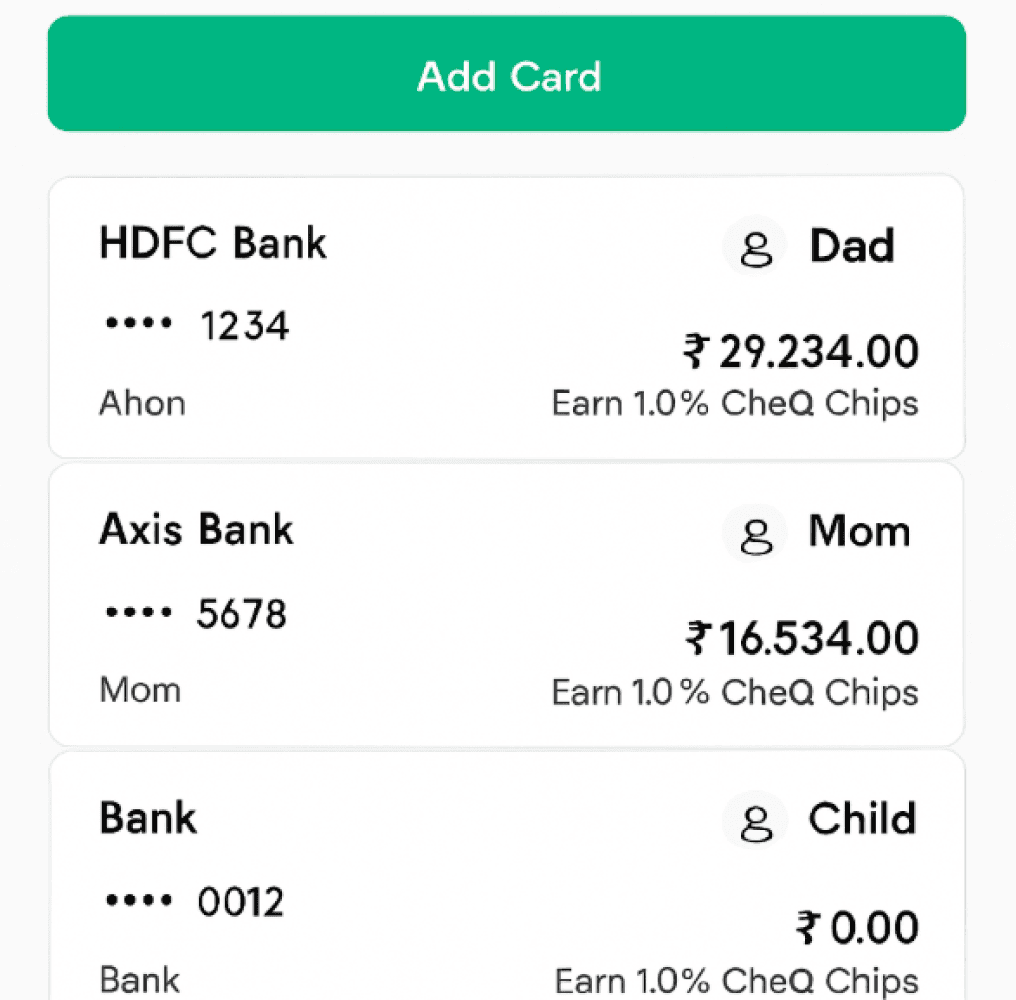

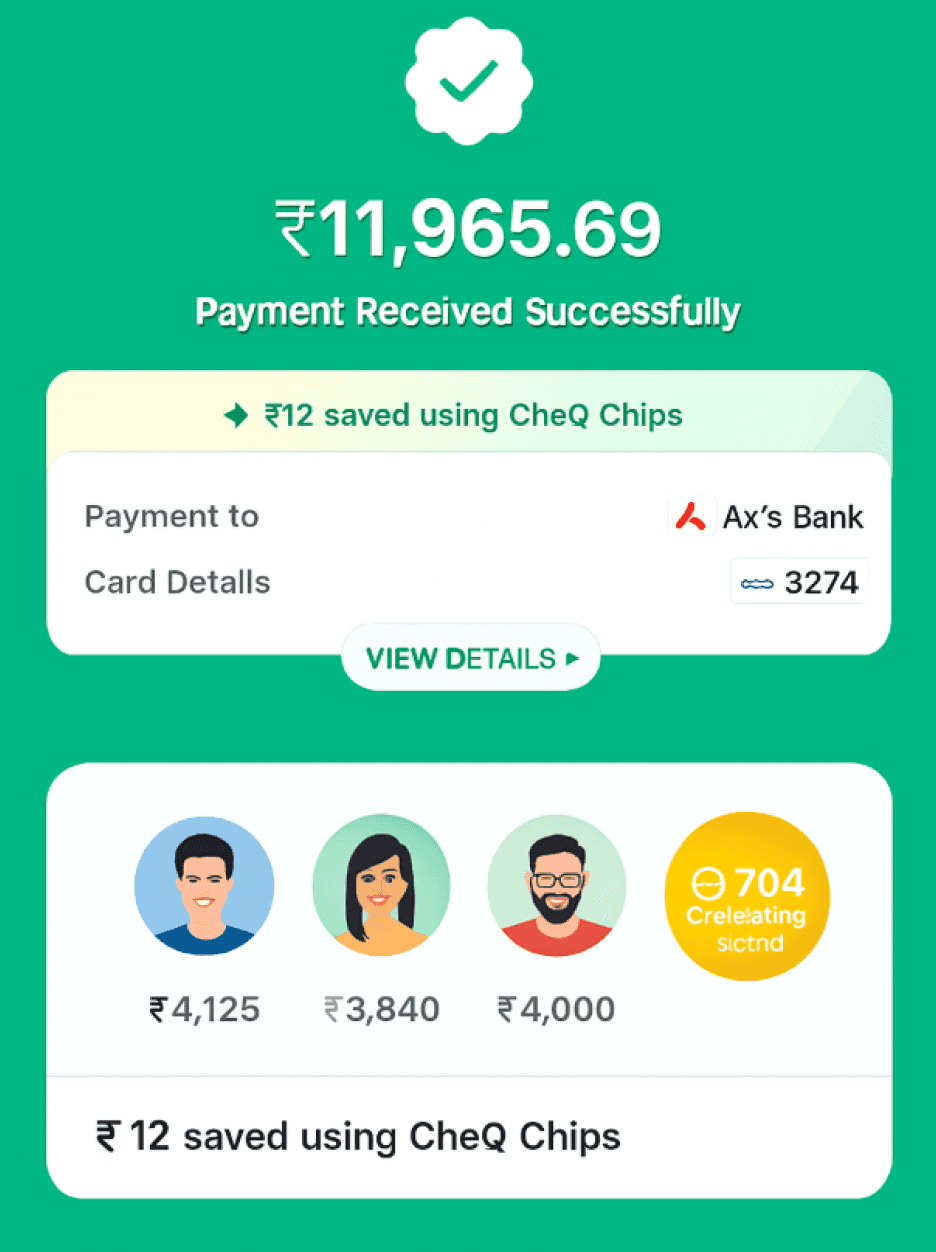
Payment to
3 cards paid together
GPay
Payment Method
Self
Mom
Dad



Other Features:
Smart Splits & Controls to set individual payment limits with a toggle to include/exclude cards from the consolidated bill anytime.
Reward Multiplier: By paying a higher consolidated amount via Pay Together, family earns tiered rewards & Milestone bonuses
Reminders & receipts will be visible to every family member
Family View Prototype
Show Pay Together option only when multiple cards are due this will prevent clutter & reduces cognitive load on users (crucial in FinTech design)
Keep Pay Together toggle as a Default choice (Status Quo Bias) - works powerfully in FinTech design (Reduces friction & quicker adoption).
Once user tries to turn off the toggle highlight what users stand to lose use (Loss Aversion Trigger) using a tool tip (eg.- “Turning off means you’ll miss out on 2X rewards”
Run A/B tests with different nudges — “Rewards” vs “Time-saving” vs “Social proof” — to see which drives more users to keep the toggle ON further increasing feature adoption
Behavioral Psychology and User Motivation
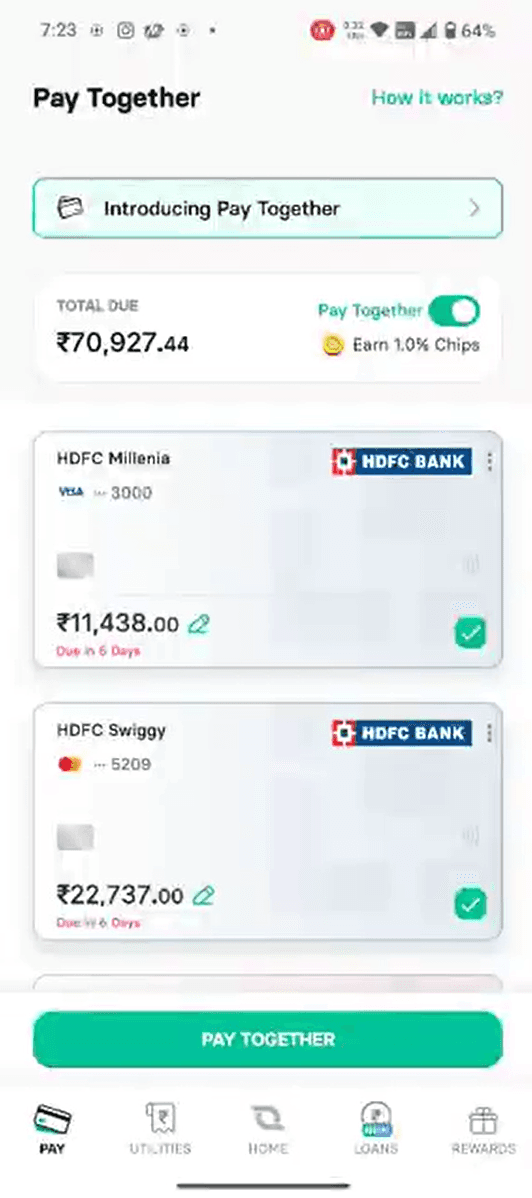
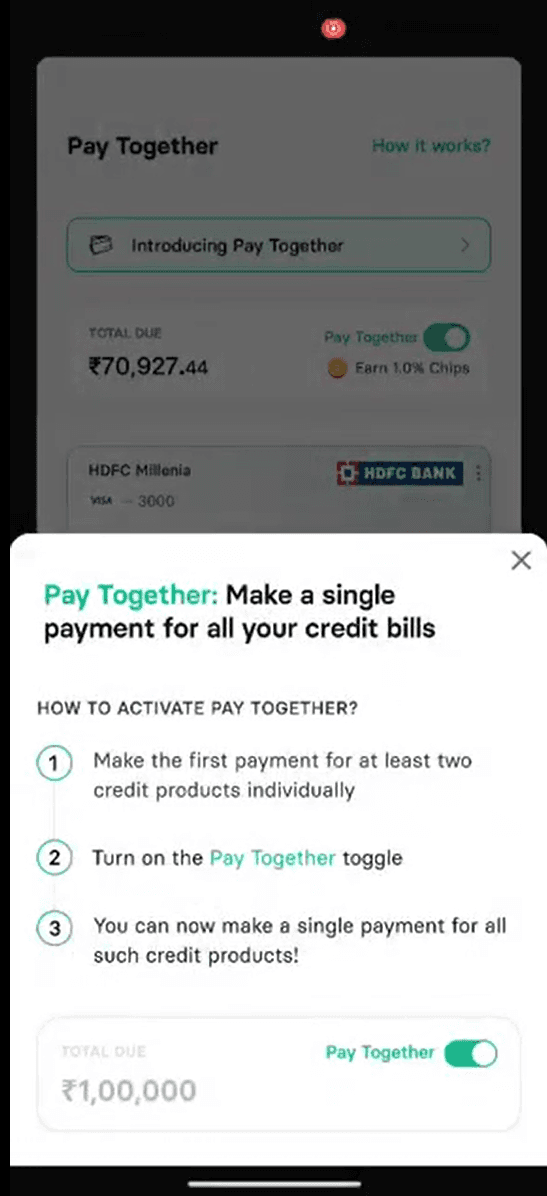
Are you sure you don’t want to pay all your credit bills together?
Switching this off means losing 2X rewards on your payment
Most users like you keep Pay Together ON to earn extra rewards
Pay Together keeps all your payments in one place — turning it off may cause missed payments
Prototyping Solution
Gamified Progress Indicators
Introduce a progress bar showing percentage of credit bills cleared using “Pay Together” feature & have reward milestones with bonus CheQ chips
Gamified Badges like “Pay Master” badges to unlock vouchers at each stage creating a hook for users further increasing feature adoption
Rewards Feedback
Show instant reward pop-up (CheQ Chips credited live) after the first Pay Together use
Gamification and Achievement Systems
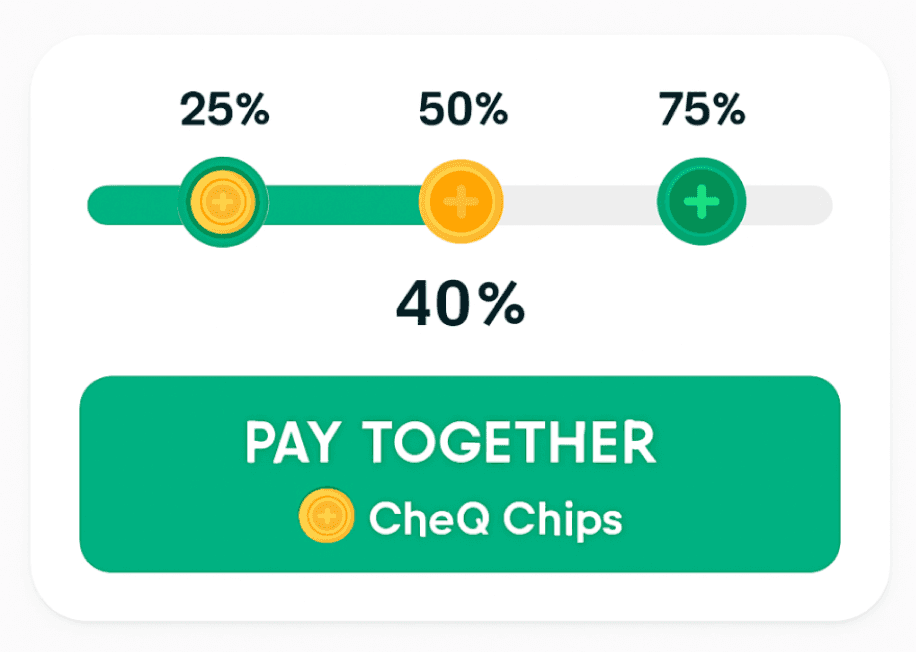
Instant Reward Boost: Double CheQ Chips for the first 3 “Pay Together” transactions to create a trial hook
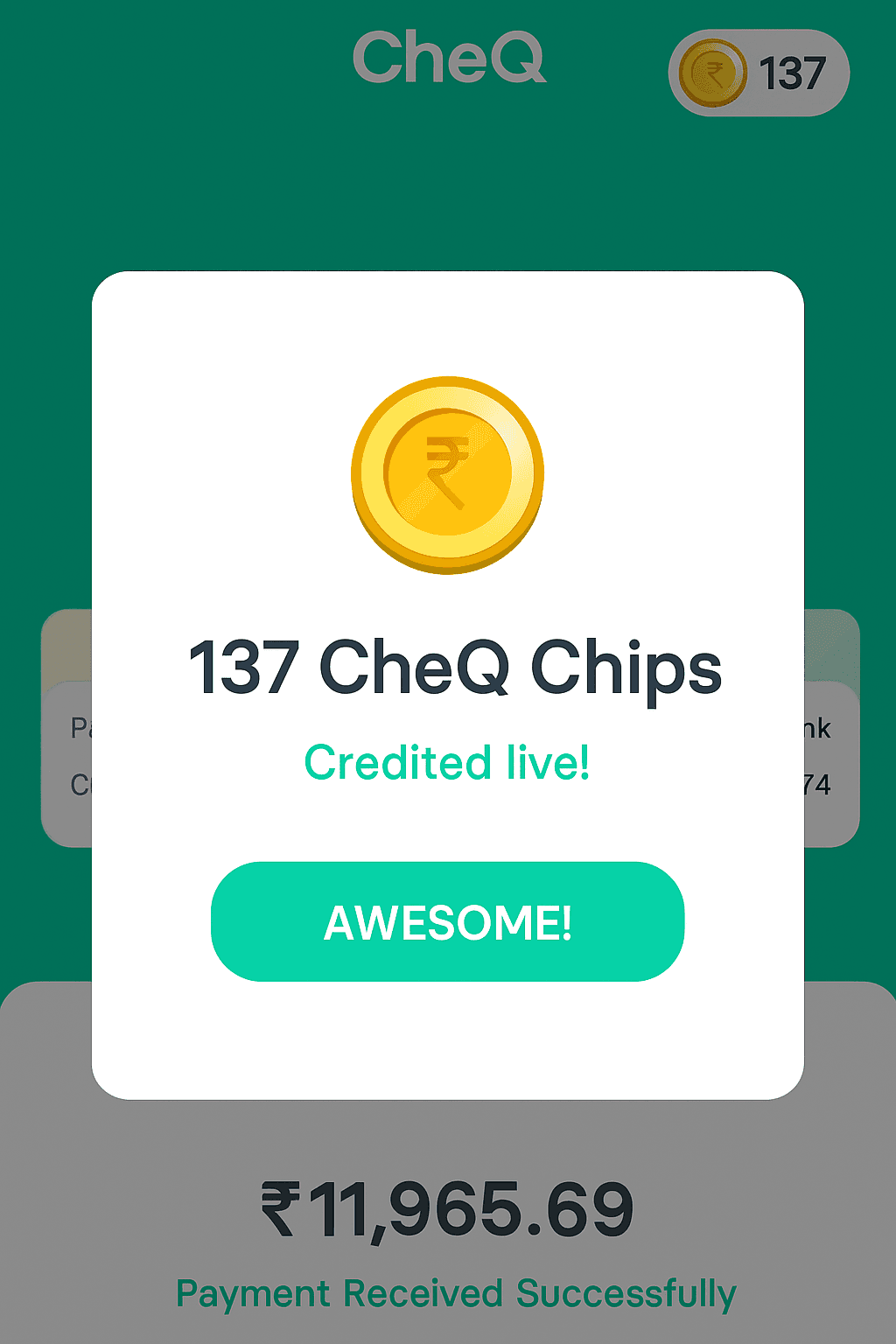
Localized UX Prototype
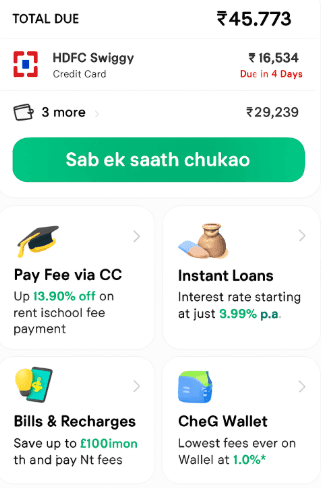
Multiple language support with simplified UX copy like “Sab ek saath chukao” for Tier 2 & 3 adoption
How Family View Directly Boosts Pay Together Adoption?
Network Effect
Family View multiplies adoption naturally
Bigger Incentive
Tiered reward boost can feel significant to users
Habit Formation
Paying together as a household
Long-term Retention
What’s Next?
Have a question or a project in mind?
I'd love to hear from you. Let's chat and make something amazing together.
Created with ❤️ by @hetalverma
Count of successful Pay Together transactions per week (across all users), where a transaction includes ≥2 bills paid in one flow. This captures true delivered value: time saved, fewer steps, and reduced friction per bill cycle.
Supporting Metrics:
North Star Metric
Weekly Consolidated Bill Payments
Discover
Indicates surface reach & targeting quality
Targeted User Personas
Feature Exposure Rate =
Users who see a Pay Together entry point
x 100
eligible users (≥2 active/due cards that week)
Try
Measures Aha! conversion
Activation Rate =
Users who select/toggle Pay Together
x 100
No. of Visitors
Repeat
Habit formation signal
Repeat Usage Rate =
Users with Pay Together payments in window
x 100
Pay Together users
Streak Depth & Break Rate =
Median streak length
% streaks broken after promo ends
Other Metrics to Follow
Time to adopt: Time users need to start actively using the feature from the moment they are exposed to it. A short time to adopt is evidence of effective onboarding processes.
Duration of adoption: how long the users continue using the feature after the initial adoption. Feature usage often drops when the novelty factor wears off, so the duration of adoption is an indication of real feature value.
Default Toggle (Status Quo Bias) Risk
Users may feel “tricked” if Pay Together is turned ON by default & they didn’t consciously choose it. This could lead to distrust in fintech context
Mitigation:
Add a clear “Why Pay Together is ON” explainer tool-tip
Ensure opt-out is one-click, not buried
Run A/B tests to balance adoption lift vs. drop-offs due to distrust
Family View Prototype Complexity
Adding family cards & dashboards could create onboarding friction. Users may worry about privacy & control (“Will my dad see my expenses?”)
Mitigation:
Start with a light version (e.g., invite spouse/kid only)
Allow granular privacy controls (limit visibility of details, just show total)
Overemphasis on Rewards (Incentive-Driven Growth)
If rewards are the only driver, adoption may collapse when incentives are reduced or removed. Users may become reward-chasers rather than loyal adopters
Mitigation:
Layer in time-saving, convenience, trust & family view value proposition alongside rewards
Promote Pay Together as a default ritual (habit formation), not just a discount trick
Pitfalls & Mitigation Steps
Notification Fatigue
Too many nudges (reminders, tool-tips) can overwhelm users, leading to mute/uninstall
Mitigation:
Use event-based, contextual triggers (only show nudges near due dates or when multiple cards are detected)
Introduce frequency caps (max 2 nudges per bill cycle)
#1
#2
#3
#4